
Simplified river network · OS Open Rivers
Contains OS data © Crown copyright and database right 2024
Case study
Catchment-scale sensing with United Utilities
After a successful pilot, United Utilities rolled FreeUP sensors out across a whole catchment, installing them during a flood without visiting the sites first. No concrete or mains power was needed, and three internal teams now share one real-time view of the river, alongside rain radar and soil moisture data.
- internal teams in one shared system
- 3
- in-water readings a day
- 3,600
- out-of-water data points a day
- 262k
- concrete or mains power needed
- 0
The pilot
Showing in-river monitoring could be relied on
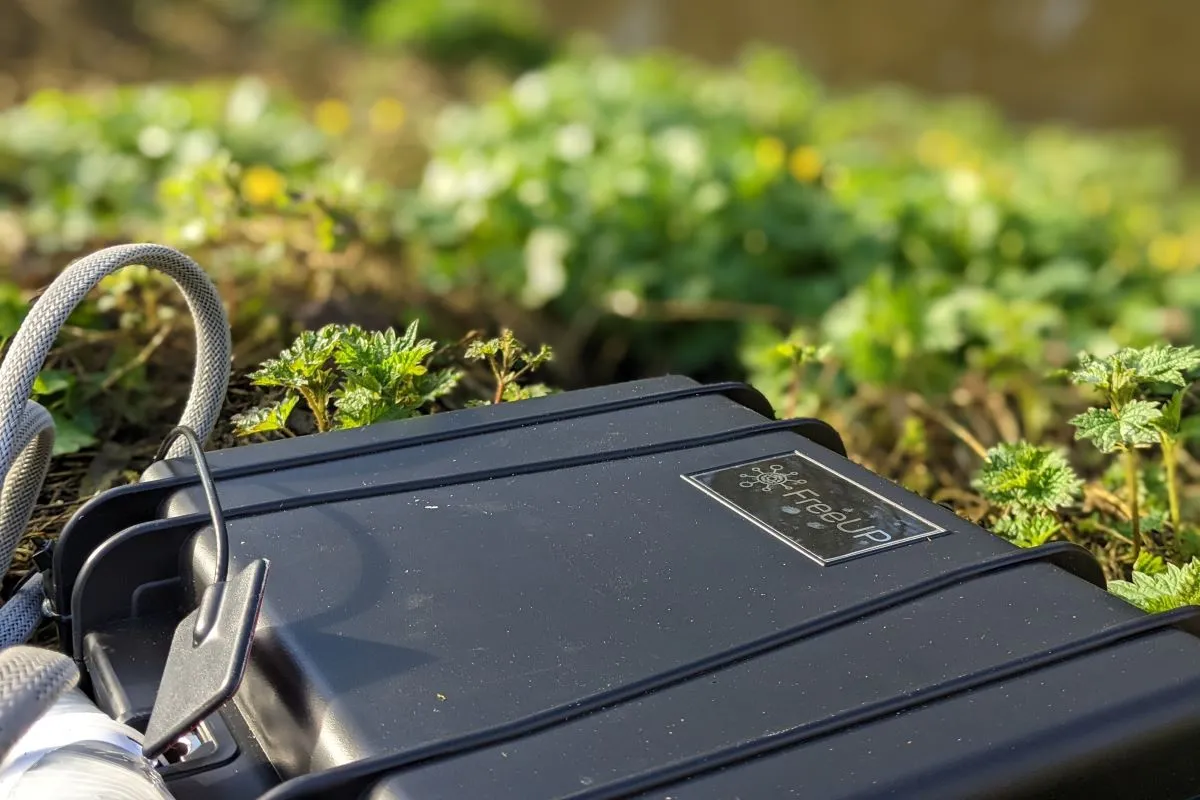
United Utilities selected FreeUP after a pilot showed that reliable in-river measurements could be achieved with our low-cost, briefcase-sized sensing solution, Guardian.
It gave them real-time sensing without pouring concrete or bringing mains power to remote riverside locations, and removed the follow-on work of processing data from loggers, because the dashboard turned readings straight into insight.
At scale
Deployed catchment-wide, during a flood
In the current demonstration, far more sensors are deployed across the catchment so it can be better understood and predicted.
Sensors went in during a flooding event, without prior physical inspection of the sites. Remote tools assessed each site’s suitability instead, cutting deployment cost and effort. The data is combined with rain radar, satellite soil moisture and other datasets to give United Utilities’ teams an overview no single source could.
What made it work
Designed for real river conditions
No ground works
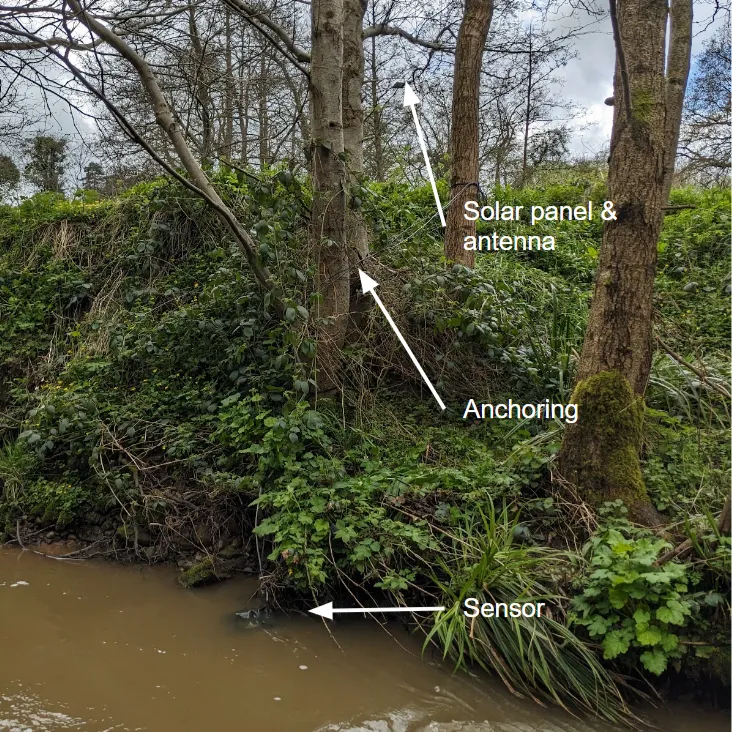
Lowered into the water with the antenna fixed to a tree, bridge or similar, so sites can be set up quickly.
Data in context
Above-water data such as rainfall and soil moisture makes the in-water readings far more meaningful.
Lower running costs
The sensors clean themselves, which cuts the number of inspections needed.
Less vandalism
With no bank box or floating parts, the sensors are almost invisible from the bank, even near busy public spaces.
“We were pleased to see first hand how reliable and easy to deploy FreeUP’s hardware has been. Despite being extremely near to busy public spaces there has been no vandalism due to the sensor’s shape and deployment considerations, and the units have performed perfectly through some very challenging environmental conditions. The dashboard has enabled very different teams and data sets to work together.”
Planning catchment-wide sensing?
Talk to us about requirements, deployment and getting the data to every team that needs it.