
What are bioindicators?
Bioindicators are living things whose presence or absence shows how healthy an ecosystem is, and several are used to assess UK freshwater quality.
For a bioindicator, an organism’s numbers and condition can be as telling as whether it is there at all. The most useful bioindicators are abundant and easy to collect.
Bioindicators of water quality
Certain aquatic organisms are good indicators of water quality, and the best one to use depends on what is being investigated. Some of the most commonly used bioindicators in UK freshwater systems include:
-
Macroinvertebrates: small aquatic animals without a backbone that can be seen with the naked eye, including insects, crustaceans and molluscs. They are sensitive to changes in water quality and are often used to assess the health of a freshwater system.
-
Fish: different fish species tolerate pollutants to different degrees, so the presence or absence of certain species can indicate the overall health of a water body.
-
Aquatic plants: plants such as water lilies can also be used as bioindicators. The presence of certain species can indicate a healthy and diverse ecosystem, while a lack of plants can be a sign of poor water quality.
-
Algae: algae are widely used as bioindicators, especially of eutrophication, when excess nutrients in the water cause excessive growth of algae and plants. Some of these blooms, including those of cyanobacteria, can become harmful algal blooms.
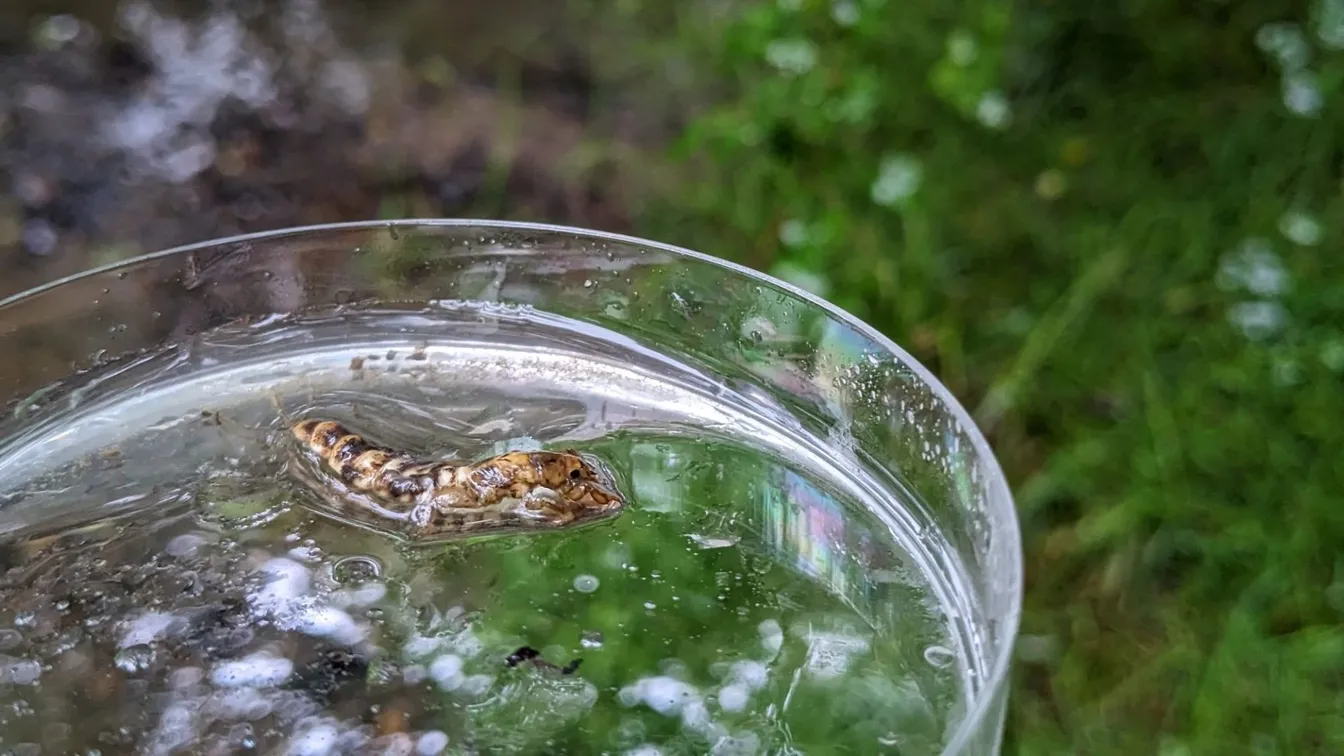
Different organisms tolerate pollutants and changing conditions to different degrees, so a combination of bioindicators is often used to assess the overall health of a freshwater system. Biological surveys are usually combined with chemical and physical measurements, as our guide to how you measure the health of a river explains. The FreeUP Platform lets survey results and field observations sit alongside sensor readings and lab results, so they can be compared.